A checkweigher measures the weight of every pack while it moves on a belt and automatically removes underweight or overweight packs from the line. Net-quantity control, reduced overfilling and weight records for audits are its main uses.
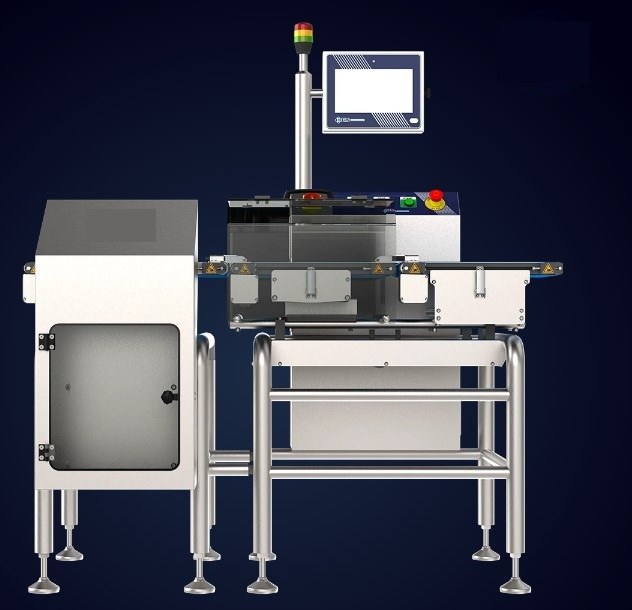
A checkweigher is installed at the end of the packing line. Each pack moves from the infeed belt onto the weigh belt, the load cell reads its weight as it passes, and if the weight is outside the defined limits the reject system removes the pack from the line. It complements the metal detector: the metal detector inspects for metal contamination and the checkweigher for the quantity of product in the pack.
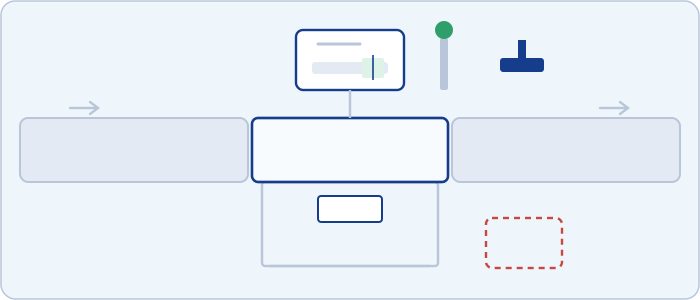
| Principle | Dynamic weighing: pack weight is read in motion on the belt without stopping the line |
|---|---|
| Belt structure | Infeed belt, weigh belt on a load cell, and outfeed belt |
| Rejection | Out-of-range packs leave the line through a reject system (pusher arm, air blast or drop flap, depending on the product) |
| Display & control | Touchscreen for setup, weight and statistics; signal tower for pass and reject status |
| Statistics & reports | Mean and standard deviation of weight, number rejected; usable for audits and filler adjustment |
| Profiles | Stored settings for different products and fast changeover |
| Construction | Stainless frame with adjustable feet for food environments; details and ingress protection of each model are specified at order |
Capacity, accuracy, speed and belt dimensions are designed around your product and line; send us your data and we will propose an exact configuration.
Send us your pack weight, dimensions and line speed and we will recommend the right model and reject system.
An ordinary scale weighs a stationary pack, while a checkweigher reads weight as the pack moves on the belt and automatically removes out-of-range packs without stopping the line.
No. A metal detector inspects for metal contamination and a checkweigher for product quantity. Many lines need both, and they can even share one belt.
Pack weight range, dimensions, line speed (packs per minute), packaging material and the type of rejection required. See our guide to choosing a checkweigher.
The interval is set by the quality procedure or customer; commonly at start of shift and at product changeover using a reference weight or pack.