A checkweigher reads weight from a moving pack, so it needs a vibration-free floor, steady air conditions, regular pack spacing, a suitable belt speed and stable power. Most weighing errors come from the installation site, not the machine.
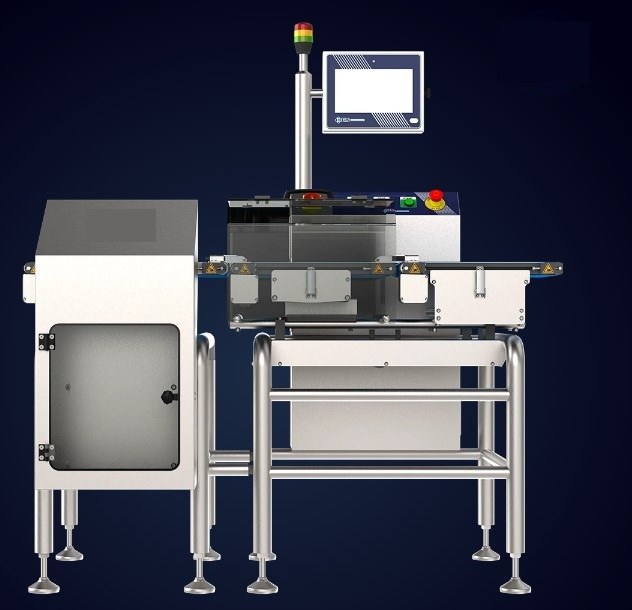
A checkweigher load cell reads a few grams, or tens of grams, within tens of milliseconds. Any environmental force acting on the belt at that moment appears directly in the weight reading, which is why the installation site is part of the machine's specification.
The machine must stand on a level, firm floor with its feet adjusted and with no contact with a vibrating structure. Proximity to a filler, press or generator injects vibration into the load cell. Where ambient vibration exists, an independent base or vibration isolator is used and the machine is kept clear of walls and rails attached to other machinery.
Ventilation, cooler or fan airflow pushes on a light pack and shifts its weight. For light packs, install the checkweigher out of direct airflow or use a draught shield. Sudden temperature change and condensation on cold packs also change apparent weight.
Stable supply and proper earthing are needed. If the reject system works on air, dry, clean compressed air at the required pressure must be available. For PLC or network connections, route cables away from the washdown and product path.
In food areas, choose a stainless body with washable surfaces and no product-trapping corners. Check that the ingress protection (IP) rating suits spray washdown and keep the electrical cabinet out of the wash path.
Load-cell capacity must suit your lightest and heaviest pack. A very light pack on a large cell, or a heavy pack on a small cell, reduces accuracy. State your product weight range in the order.
Before purchase, take photos and dimensions of the site and note weight range, line speed and airflow. With this, our proposal will be practical. For test conditions, read checkweigher testing and calibration.
Share your production line's specs with us and we'll recommend the right model.
The load cell reads a very small force in a short time, and floor or neighbouring machine vibration appears in the same signal and shifts the weight.
If two packs are on the weigh belt at once the machine reads their sum and wrongly accepts or rejects a good pack.
It pushes on light packs and changes their weight; a shield or a different position solves it.
It depends on the IP rating and model structure; specify this when ordering.