Flour and grain can create product-effect signals that affect detector performance. Detector selection and setup should account for the actual product, transfer method and operating conditions; gravity-fall inspection is relevant for free-falling powders and grains.
Flour and grain contain natural minerals that can make metal detection harder; here's what to do about it.
Flour and grain producers often run into a specific problem: their metal detector either triggers too many false alarms, or its sensitivity has been turned down so much that real metal contamination slips through. Both symptoms usually trace back to the same cause — product effect.
Flour, bran and many grains naturally contain small amounts of salt, moisture and mineral compounds. These can generate a weak signal that resembles metal, known as "product effect." If the detector isn't tuned for this, it either triggers frequent false alarms, or operators lower the sensitivity to reduce false alarms — which means real metal particles may go undetected.
In powdered products, metal particles are usually much smaller than a typical piece of metal, often coming from worn mill hammers, sieves or conveyor components. A detector built for these lines needs to filter out product effect while still catching very fine metal fragments smaller than usual detection thresholds.
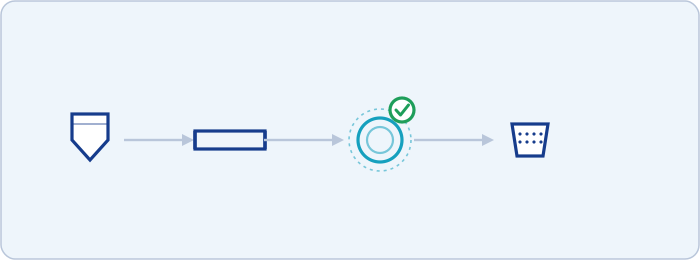
Since flour and grain typically move by free-fall through pipes or beneath silos, a gravity-fall metal detector is the natural fit. Product passes freely through a cylindrical sensing coil, and if metal is detected, a reject gate automatically diverts the flow without stopping the line.
If you're dealing with frequent false alarms — or worried that fine particles might slip through — your detector is likely not tuned for product effect. Share your raw material specs with us so we can recommend sensor settings suited to your product.
Share your production line's specs with us and we'll recommend the right model.